

Stone Circle Wedding Feature
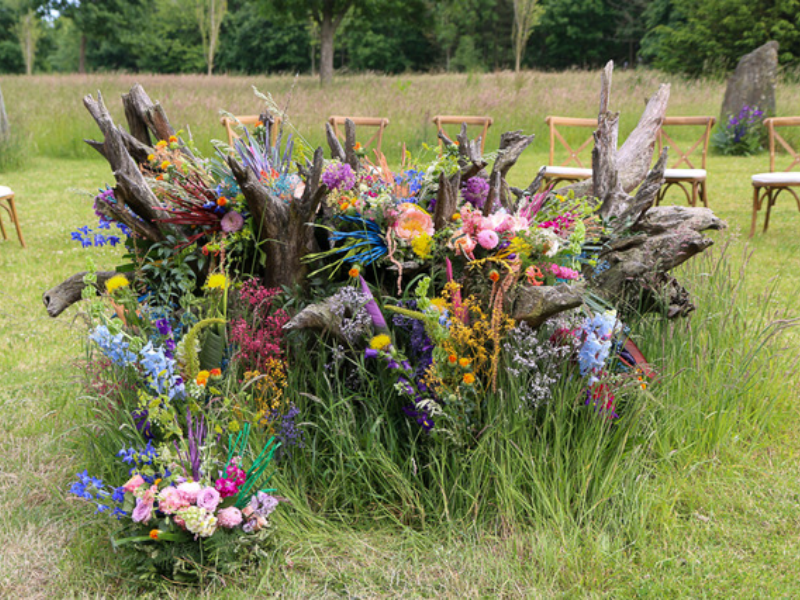
Chaucer Barn's Stone Circle Wedding Feature:
A Story of Land, Symbols, and Synchronicity.
What began as a simple gardening idea, an avenue of trees leading out into a rewilded field, unfolded into a deeply symbolic journey of crystals, druidic altars, and a living stone circle. This is the story of how an upside-down tree, a rare crystal, and a set of massive stones came together in a way that felt less like planning and more like being guided.
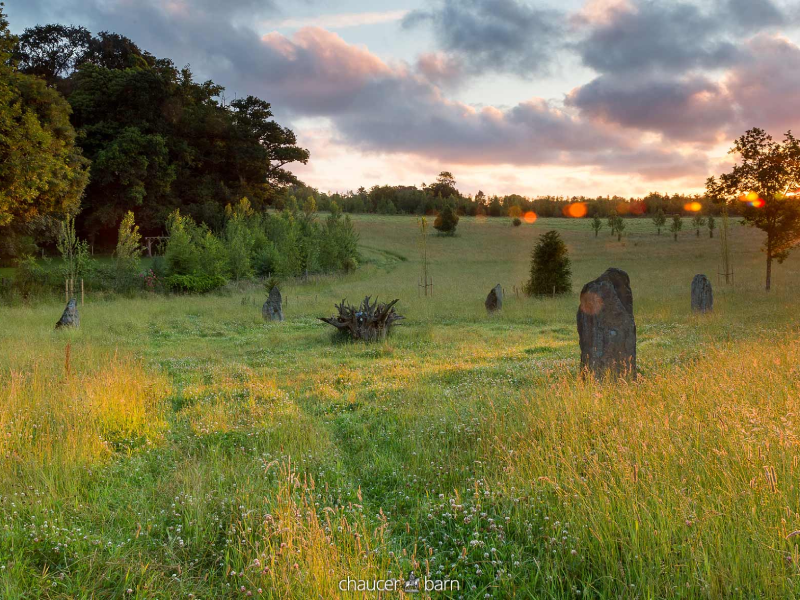
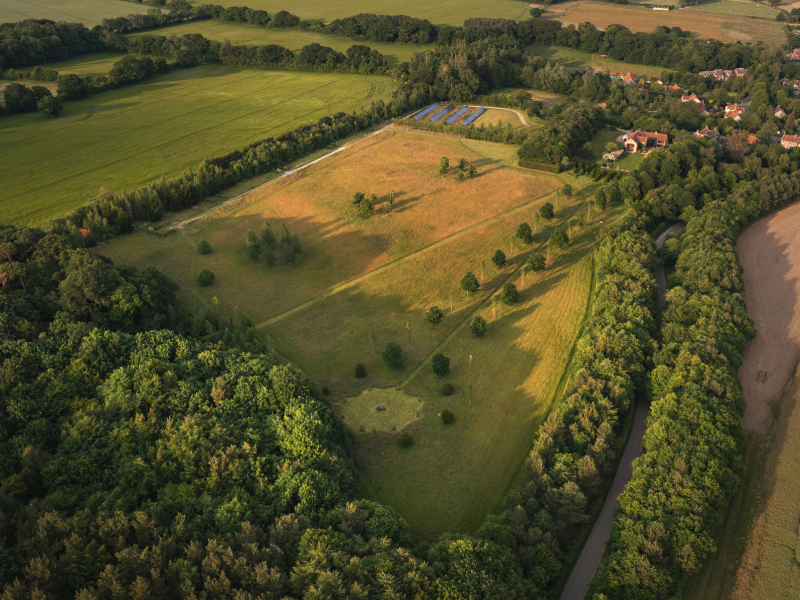
It started with a desire to create a sense of arrival: an avenue of trees stretching from the pyramids out into a newly raised, rewilded field that had once been used for crops. Drawing on a farming background, a large tree transplanting machine was hired, a lorry fitted with huge hydraulic jaws, to move the mature trees into position.
From the existing trees, the best-canopied oaks were chosen and transplanted to form the avenue.
With the avenue in place, the next question was inevitable: what should sit at the end of it? In classic garden design, you place a focal point like a sculpture, a statue, a feature that anchors the view. Instead of a classic statue or a golden Buddha, a persistent inner image kept returning: an upside-down tree stump.
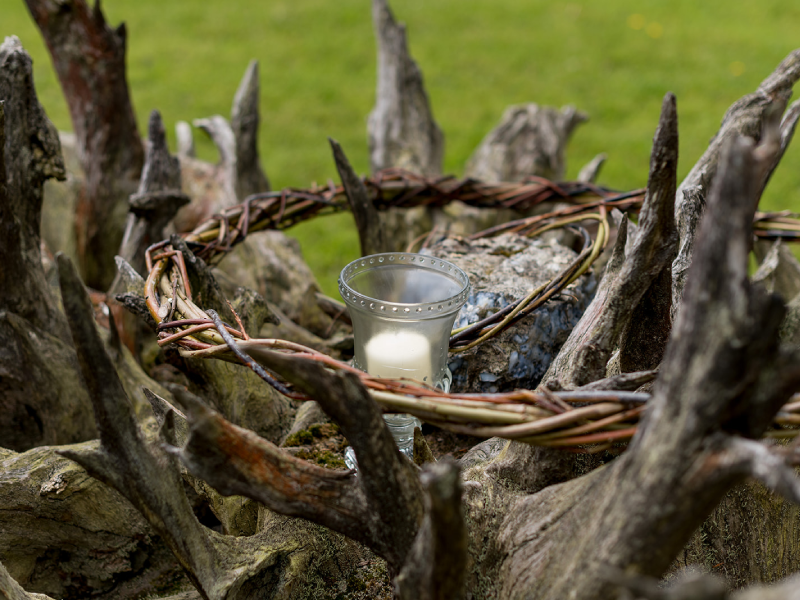
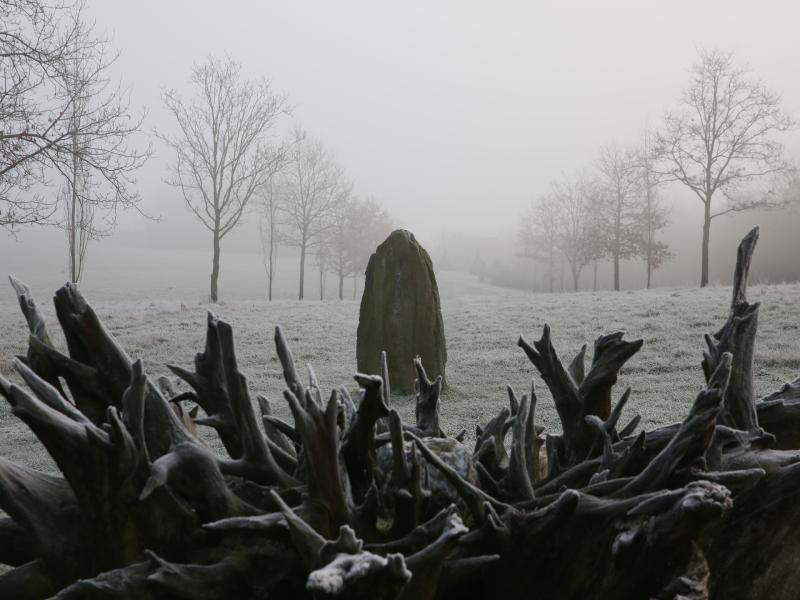
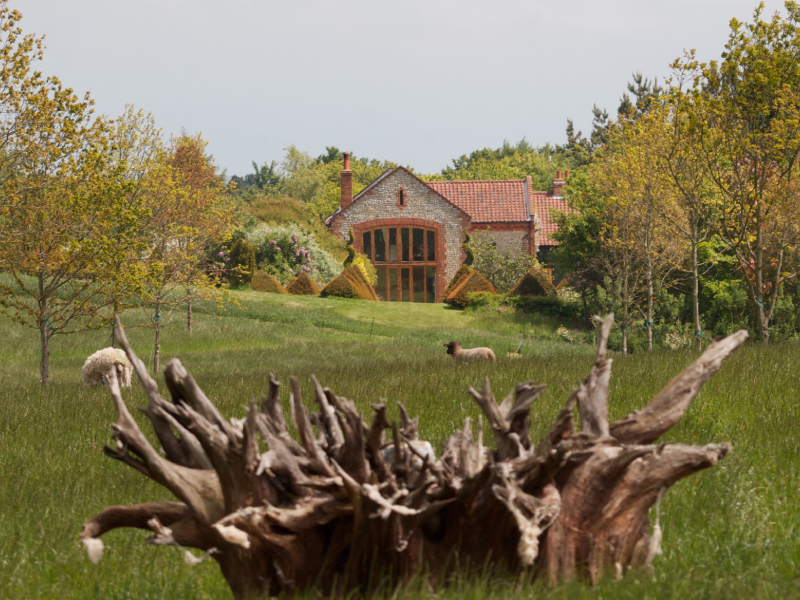
A few weeks later, at a local nursery, Fellthorpe Forest Nursery, the vision stepped into reality. Upon opening the car door, the sight was uncanny: surrounded by upside-down tree stumps, just like the inner vision. One of these was chosen and purchased, seemingly just as an unusual sculptural object for the end of the avenue. At the time, the deeper significance of this upside-down stump wasn't yet clear. It was simply an image that had appeared in the mind and then appeared again in the physical world.
Only later did the connection reveal itself.
The vision of the upside-down tree stump was, in hindsight, linked to a previous visit to an emerging archaeological site on the North West Norfolk coast: Sea Henge. This remarkable site featured what could only be described as a druidic altar, an upside-down tree trunk driven about 12 feet into the ground, gradually revealed by shifting sands. The resonance between that altar and the newly acquired upside-down stump became undeniable. It was as if the land, memory, and symbol were weaving themselves together.
The next practical step was to get the upside-down stump from the nursery back to the field by the barn. A farming neighbour, who owned a flat lorry with a crane, agreed to lend it, solving the logistics. On the day of collecting the stump, while heading downstairs to leave, a clear thought arrived: To do this correctly, and magically, there should be a crystal beneath the stump as it's lowered into place. The idea was simple but potent: anchor this altar-like object with a crystal, turning a piece of landscaping into a conscious energetic portal.
Standing in front of an existing crystal collection, a dilemma emerged. The larger crystals felt most appropriate for the job, but there was reluctance to part with any of them.
Then came another inner nudge, almost like a voice:
"Why don't you manifest a crystal, James?"
To explore this, the Crystal Bible was taken from the bookshelf, with the intention to let it fall open into the hand and allow that to determine the crystal.
The book opened on Merlinite, a stone associated with magic and the bringing together of different groups for ceremony. That description felt startlingly aligned with what the space by the stone circle would become: a gathering point for varied people and traditions.
Now the "what" was clear. The next challenge was manifesting Merlinite in reality.

First, the local crystal shop in Cromer, Little Gems, was called. Twice the call went to an answerphone. The smooth, synchronous flow so far felt momentarily interrupted.
There was an upcoming drive to Suffolk that evening, so attention turned to a Norwich crystal shop instead. A call was placed:
"Do you have any Merlinite?"
The reply: yes, ten rolled stones, around a centimetre in size. Too small for such a large-scale feature. Three Merlinite pendants were also available, again, not right.
On the third attempt, the shop owner mentioned one more option:
"We have… a foot-square chunk of Merlinite."
That was the moment the flow snapped back into place.
That evening, the shop in Norwich was visited, the car parked close in anticipation of the crystal's weight. The large piece of Merlinite was placed on the counter, and the haggling began.
The shop owner explained he couldn't go below £130, because that was the price on the original sticker when they had bought the shop. When asked when they moved in, he replied: 12 years ago.
In other words, this crystal had been sitting in the centre of the shop, unsold, for at least a decade.
The image of the shop was striking: thousands of crystals arranged in a sort of hexagonal, raised "stadium" around this single, massive piece of Merlinite at the centre, an angel figure perched above it. It felt far less like a random purchase and more like a long-term placement, waiting for the right time and the right project.
The Merlinite was brought back to the barn.
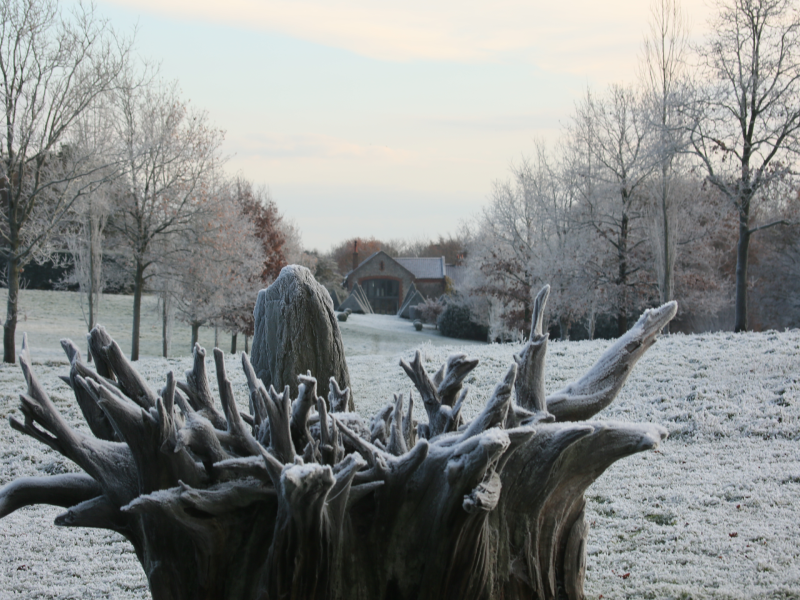
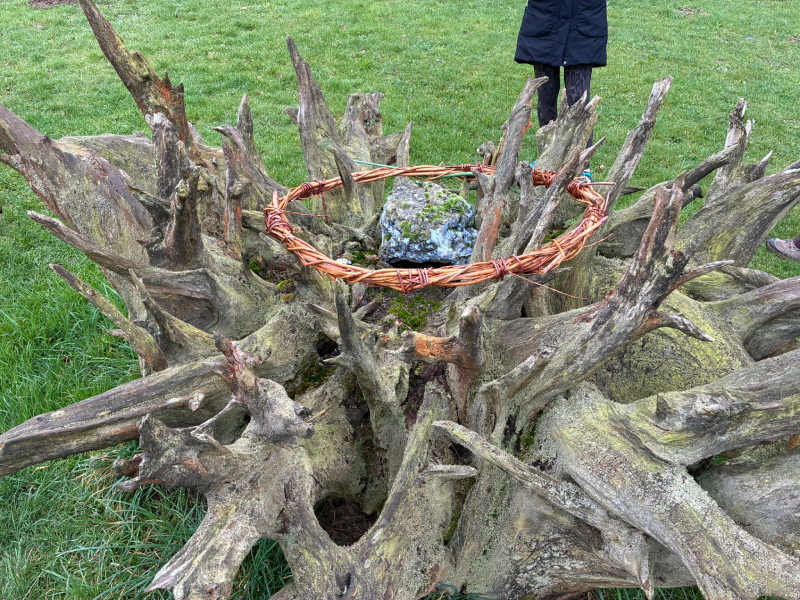
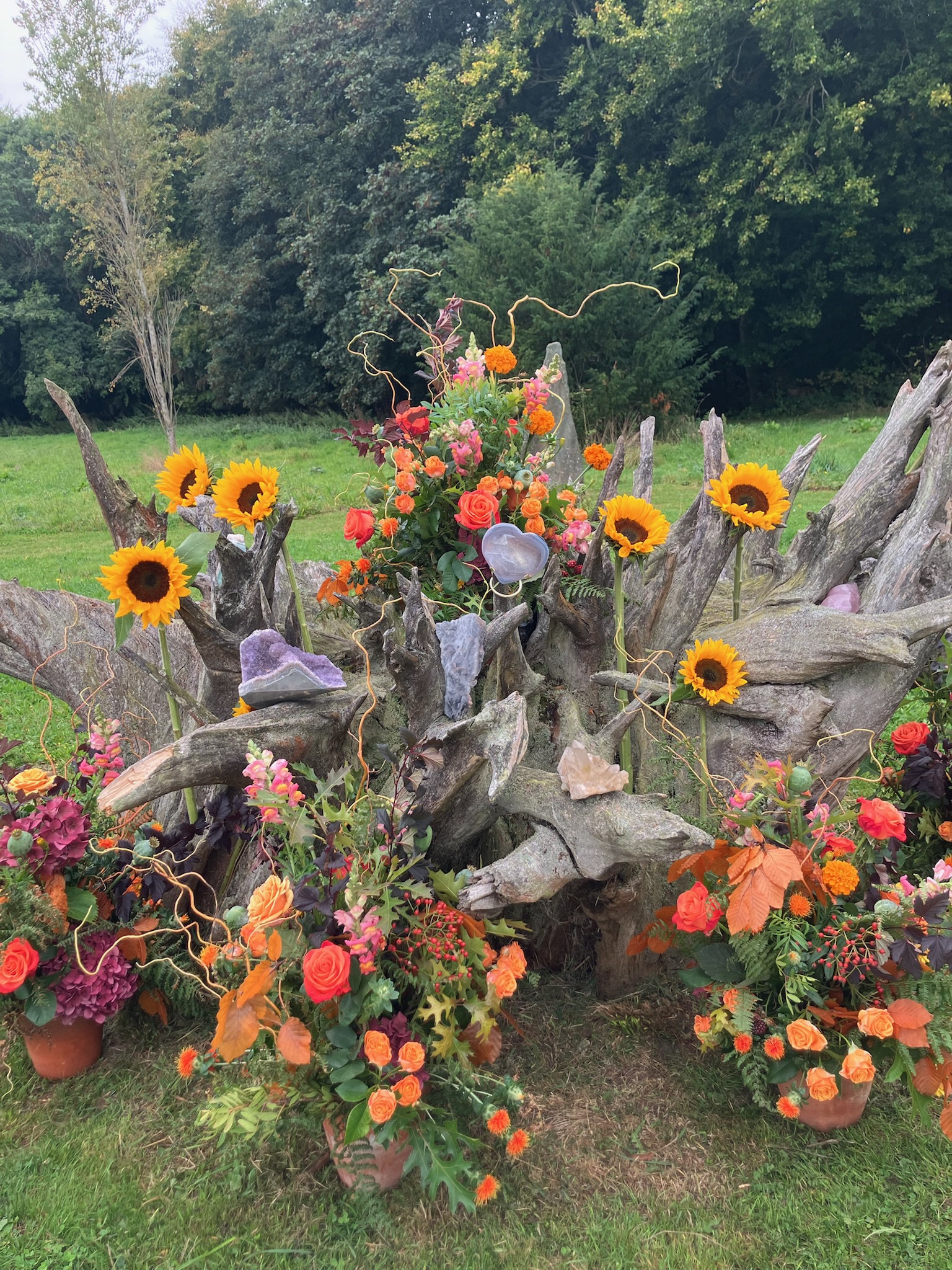
When the time came to install the upside-down tree stump, now nicknamed the Druid's Portal, the Merlinite revealed its next surprise. It was simply too large to be placed underneath the stump as originally intended. Instead, it was positioned on top of the upside-down trunk, creating an unmistakable focal point at the end of the avenue With that, the avenue had its destination: not just a sculptural endpoint, but a symbolic altar-like piece, energetically anchored by Merlinite.
Years passed before the next chapter unfolded.
One ordinary Tuesday morning, while sitting in the office, an unannounced car pulled up outside. The visitor turned out to be the contractor who had previously installed a driveway, a man who dealt in aggregates and large stones.
He stepped inside and said, essentially:
"I know you like the big stones in my yard. I'm being kicked out because the yard is being redeveloped. I don't want the hassle of moving them. You can have them for half price."
The immediate response was pragmatic, there wasn't money available at that moment. But he simply replied:
"Pay me at Christmas."
This was early June 2012. With that agreement, the stones were secured.
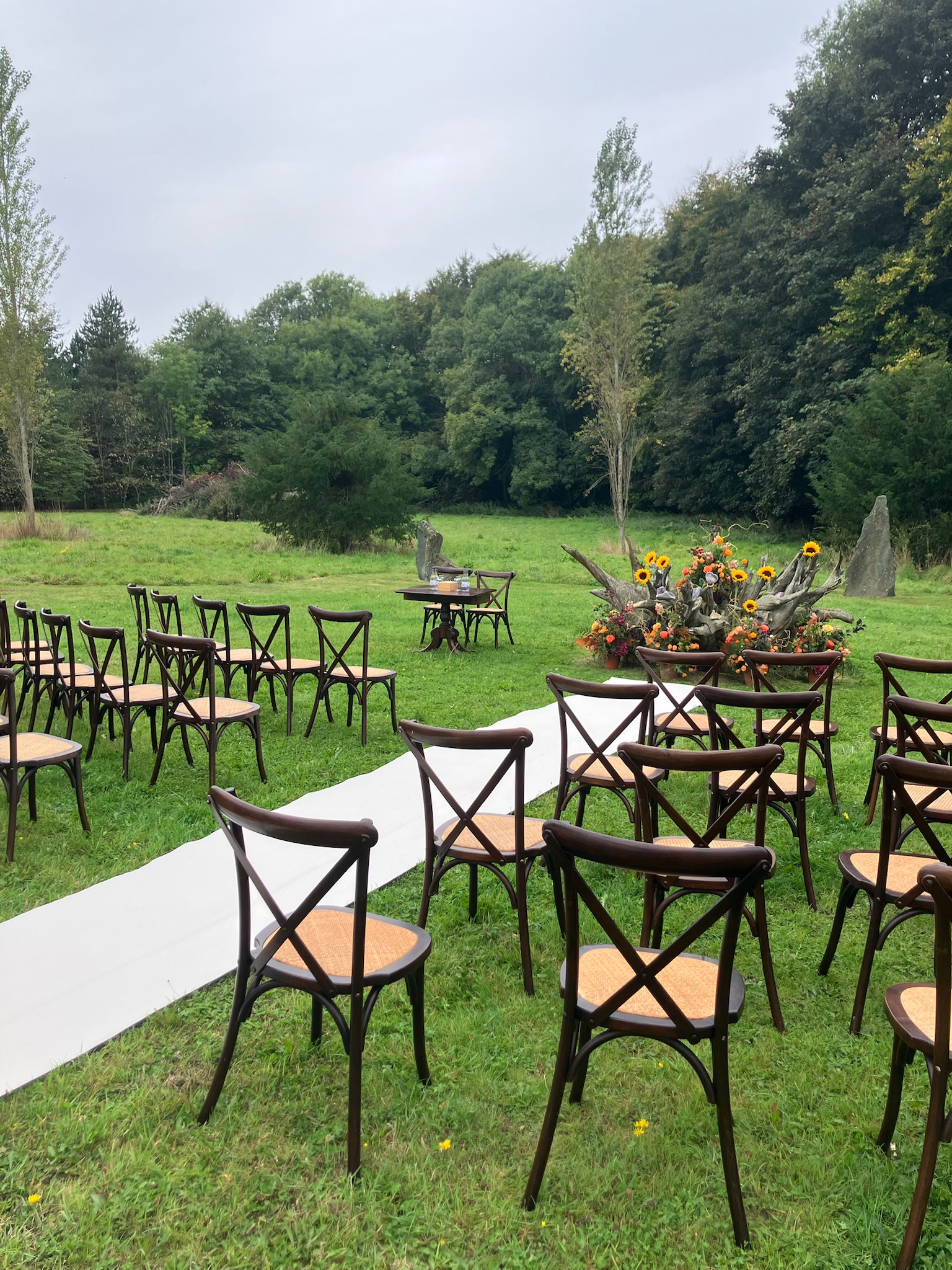
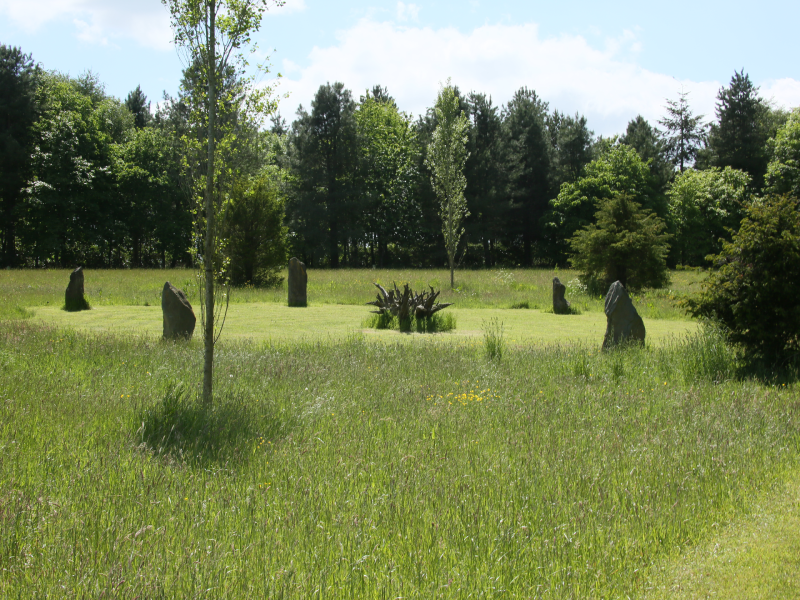
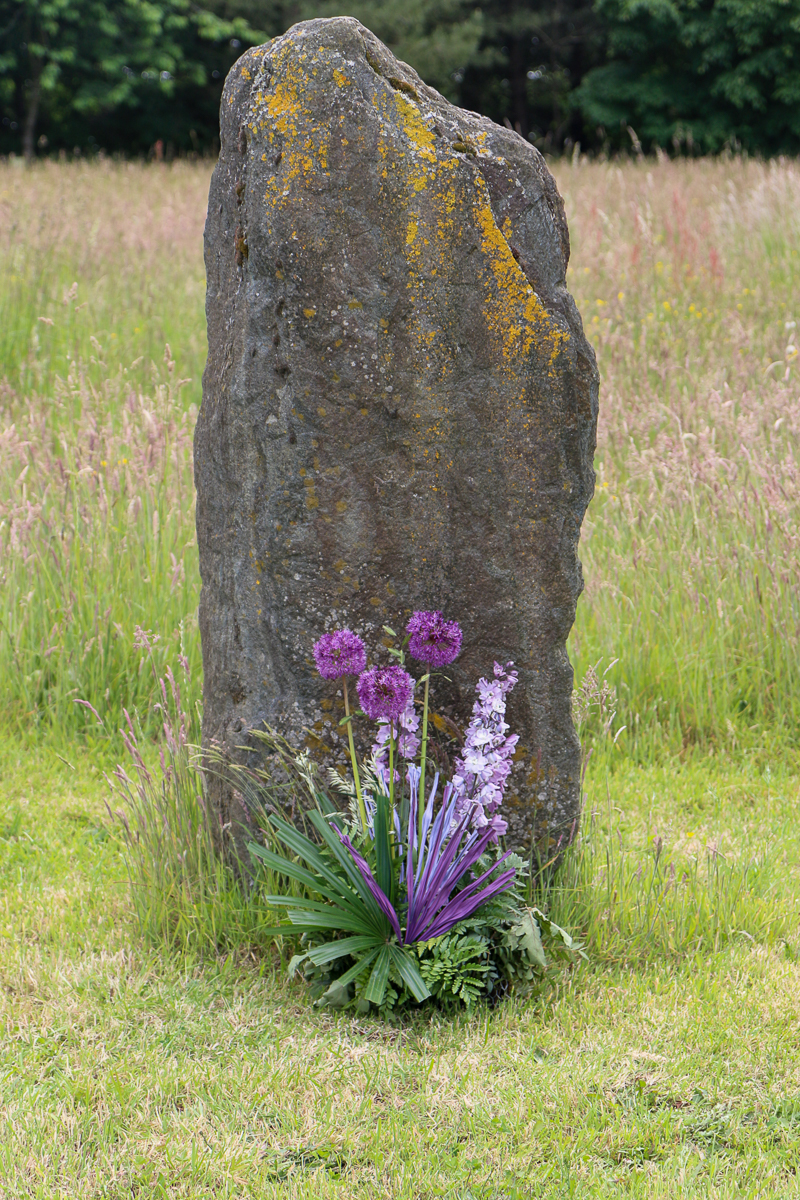
Just before the summer solstice of 2012, the stones were installed, forming what would become a stone circle. Before the big stones were set in place, crystals were buried underneath them: A cross of stones with Merlinite beneath. Another cross of stones with Moldavite beneath, a powerful channeling crystal, highly regarded for its strong, otherworldly energetic qualities. The result was a layered energetic architecture: a physical stone circle, underpinned by a crystalline grid. There had been no formal "masterplan" at the start. Yet, looking back, the sequence feels like a guided unfolding: from vision, to object, to altar, to circle.
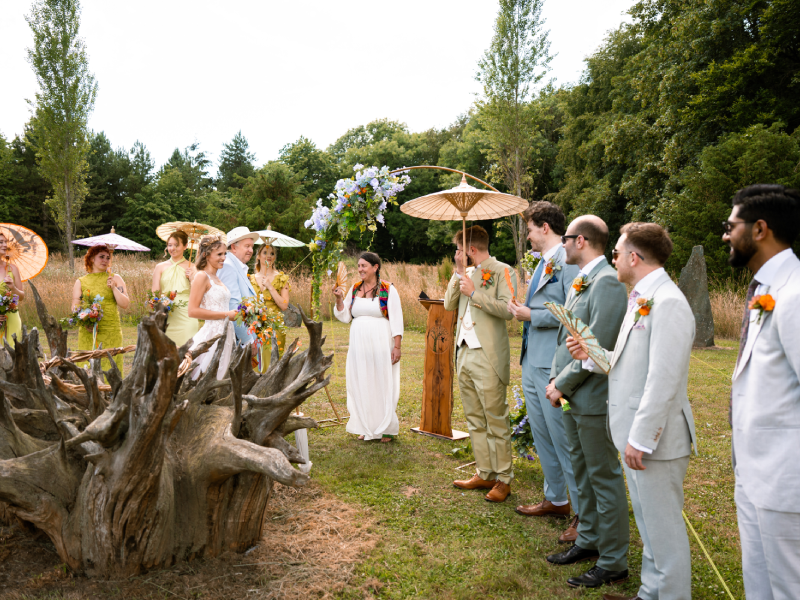
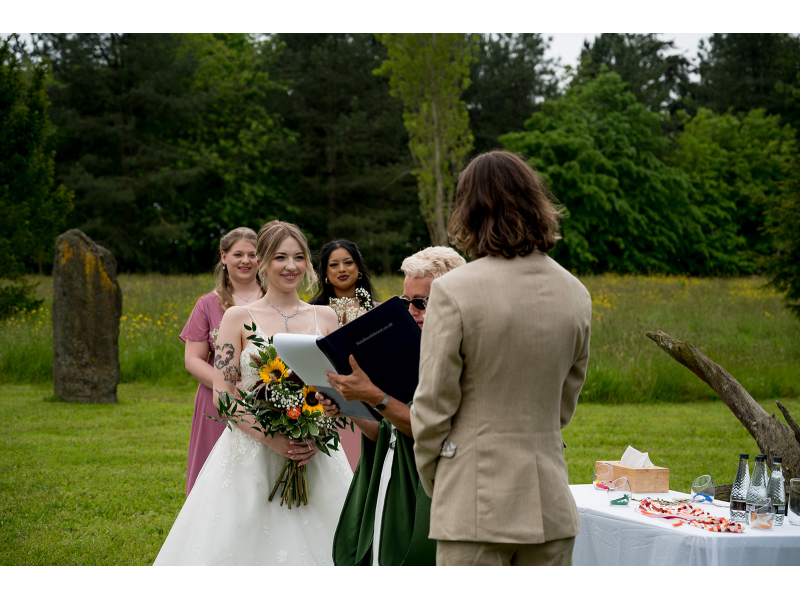
Today, the stone circle functions as a living ceremonial space.
It regularly hosts traditional Celtic and Druid-inspired ceremonies, including gatherings for Imbolc at the beginning of February, the Celtic New Year, where around 100 people may gather. The circle is also used for other significant points in the calendar such as solstices and equinoxes. Some couples choose to hold handfastings or marriage ceremonies within the circle, weaving personal vows into this wider web of land, stones, and story.
What began as a simple desire to plant an avenue of trees has become a place where people, traditions, and energies meet in ceremony. There was no rigid strategic plan for any of this. The upside-down tree stump, the Merlinite, the contractor's stones, the buried Moldavite, the final stone circle, each arrived through a chain of synchronicities, intuitions, and timely offers. The result is a space that feels less "designed" in the conventional sense and more revealed over time.
In a world driven by planning and metrics, this journey is a reminder that some of the most powerful places and experiences are born when we listen: to land, to symbols, and to the quiet, insistent invitations of synchronicity.
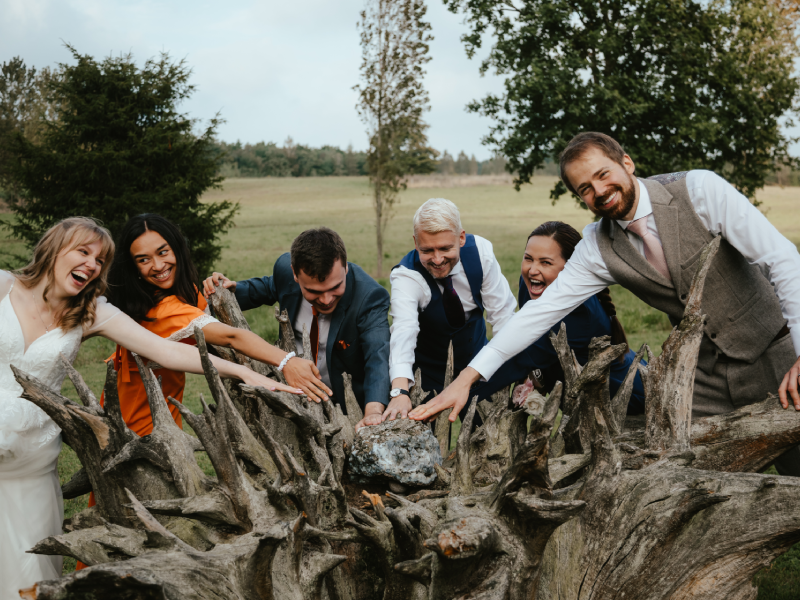
Begin your next chapter somewhere truly magical
Step into the circle, surround yourselves with nature, and create a ceremony that feels entirely your own. Whether you’re dreaming of an intimate wedding, a meaningful celebration or a peaceful moment away from the world, the Stone Circle is waiting to become part of your story.
Come and experience its magic for yourself. Book a viewing at Chaucer Barn today.